The Revenge Trap: What Gang Violence Reveals About Human Nature
we explore what decades of Bloods and Crips gang violence in Los Angeles can teach us about one of humanity's most powerful and destructive impulses - revenge.
3/5/20265 min read


What Gang Revenge Killings Teach Us About Revenge
Here's a thought that might make you uncomfortable: the gang member who just shot someone in retaliation and you, grieving the loss of a loved one and fantasising about payback, have more in common than you'd like to admit.
Both of you are trapped using the same ancient, broken circuit board in your brain that's convinced revenge will fix everything.
Spoiler alert: it won't. Revenge is just an action you take to avoid feeling the pain. And after you do it? Shocker—you still have to deal with the pain.
Prefer to watch instead of read?
Let's talk about the revenge instinct, and what a deep dive into gang culture can teach us about our own grief.
The Never-Ending Loop
I don't claim to know gang culture firsthand, but I am a massive research nerd. About ten years ago, I went down a rabbit hole studying gang culture in the US, particularly the notorious Bloods and Crips rivalry that dominated the 90s.
That research gave me a terrifyingly clear understanding of why revenge—an instinctual, visceral urge when someone you love is hurt—is rarely the closure we think it will be.
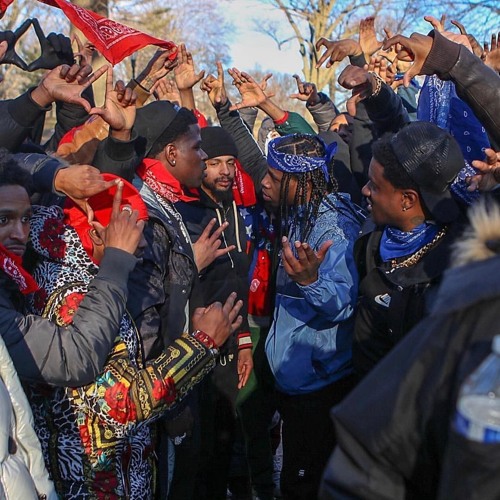
The Bloods and Crips rivalry started in Los Angeles in the late 1960s and early 70s. The Crips formed first, and the Bloods formed largely as protection against them. Revenge was baked into the origin story. But what's genuinely fascinating (in a deeply depressing way) is how the initial reasons for the conflict became completely irrelevant over time.
Ask a 16-year-old gang member today why they're beefing with a rival set, and they probably can't tell you the specific incident that started it five decades ago. What they can tell you is that their cousin was killed last year. Or their mate was jumped last month.
The revenge isn't about the original cause anymore. It's about the most recent retaliation. Set A kills someone from Set B. Set B retaliates. Set A hits back. On and on. Researchers have documented cases where people are being killed today as part of a beef that started before they were even born.
Gang revenge killings aren't some mysterious cultural phenomenon foreign to the rest of us. They're just the most extreme, visible version of an impulse we all carry around.
Why Payback Feels So Damn Good
Before you think, "Well, I'd never do that," let's be honest about how powerful the revenge urge actually is.
When someone hurts you or someone you love, the desire to hurt them back isn't just strong—it feels morally right. It feels like justice. Your brain is literally screaming at you that this is the correct response.
When someone we love is hurt, our brains light up like a Christmas tree. The amygdala—the bit responsible for processing fear and anger—goes into overdrive. You get a massive dump of stress hormones. Your prefrontal cortex, which usually handles rational thought and impulse control, essentially takes a back seat.
This isn't a moral failing. This is biology. This is the exact wiring that kept our ancestors alive when survival depended on immediate, aggressive responses to threats.
Studies on revenge psychology show that people consistently predict they'll feel better after getting even. (As Sam often points out, people severely lack critical thinking skills in these moments). We imagine that payback will bring closure, satisfaction, and relief.
But here's where reality diverges sharply from expectation: when researchers study people who actually get revenge, they don't feel better. They usually feel worse. Instead of closure, they get rumination. Instead of moving on, they become even more fixated on the original offence.
Taking revenge forces you to relive the incident, dwell on it, and keep the wound fresh.
Grief Multiplication
In Los Angeles County, studies have shown that up to 70% of gang-related homicides are retaliatory. That's not random violence; that's systematic revenge. And the cost isn't just measured in bodies.
Think about the accumulated grief. Every revenge killing creates new grieving families, new people with fresh revenge urges, and new potential retaliators. It's grief multiplication. One death becomes two, becomes four, becomes eight. Mothers lose sons, who had brothers, who had friends, who had children. The trauma ripples outward.
And the people seeking revenge? They destroy their own lives, ending up dead or in prison. Their families lose them too. The revenge didn't undo the original harm—it doubled it.
The Collateral Damage
Let's bring this out of the gang world and make it concrete with something that could happen to any of us.
Imagine your child is killed by a drunk driver. The grief is unimaginable. Every cell in your body is screaming for revenge. So, you decide to bypass the courts, follow your primal urges, hunt down the driver, and kill him at his home.
But you didn't stop to think that he had a wife and a small child. They are now collateral damage. They didn't ask for this. But now they're hurting, and you caused that. Now, the logic of revenge dictates that maybe they should just follow their feelings and kill your wife. That's the rulebook you just established.
Or worse—and this happens—a drunk driver kills someone's child, and the grieving father retaliates by killing the drunk driver's child. An eye for an eye. A child for a child.
Do you feel good after you've destroyed an innocent life? Does your grief go away? Does your child come back? No. You just lie awake knowing you've become the exact thing you hated. You go to jail, leaving your spouse to grieve two losses. Instead of sitting with your difficult feelings, you made a choice that hurt everyone around you.
Your feelings of rage are entirely valid. But here's the crucial bit: feelings are valid; actions are not.
When someone hurts you, your brain does the exact same thing a gang member's brain does. You want payback. Maybe your version isn't murder—maybe it's destroying someone's reputation, getting them sacked, or ruining their relationship. The scale is different, but the psychological mechanism is identical. And it won't make you feel better.
The most powerful thing I learnt from researching gang cycles is this: the people who escape aren't the ones who get the perfect revenge. They're the ones who find a way to step off the ride entirely. This doesn't mean you don't feel angry. It doesn't mean you don't want justice. But justice is about accountability and preventing future harm. Revenge is about making yourself feel better by making someone else feel worse.
An eye for an eye makes the whole world blind. That's not just a nice quote for a bumper sticker. It's literally what happens.
The hardest thing to accept when you're hurt is that sometimes the only way to stop the pain from spreading is to carry it yourself. To feel it fully, to grieve it properly, and then to consciously choose not to pass it on. That goes against every evolutionary instinct we have. But it's the only thing that actually works long-term.
Your brain will tell you that revenge is the answer. You have a choice: do you seek payback to feel good for five seconds and suffer the consequences forever? Or do you put in the brutal, unfair work to heal?