Plastination Exhibitions Explained: Body Worlds, Ethics, and Human Rights
We examine the controversies surrounding consent, dignity, and the sourcing of human remains, including allegations involving unclaimed bodies, executed prisoners, and a largely hidden international cadaver trade.
1/26/20265 min read
Are You Looking at Murdered Prisoners?
You’ve probably seen the ads.
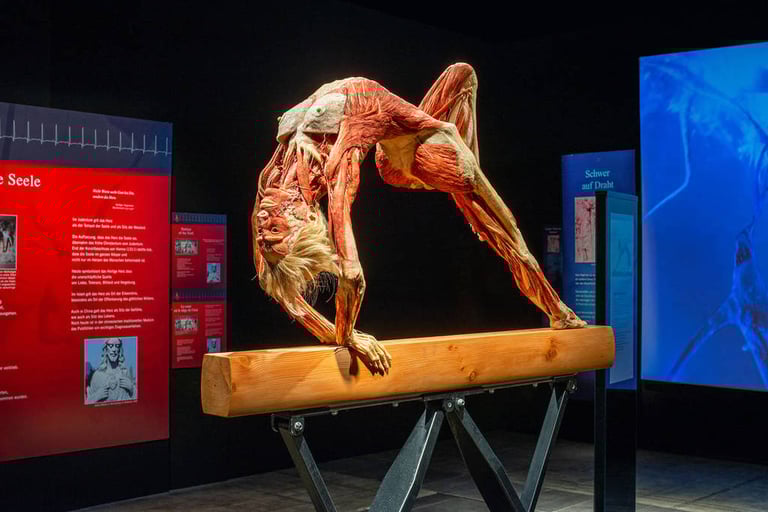
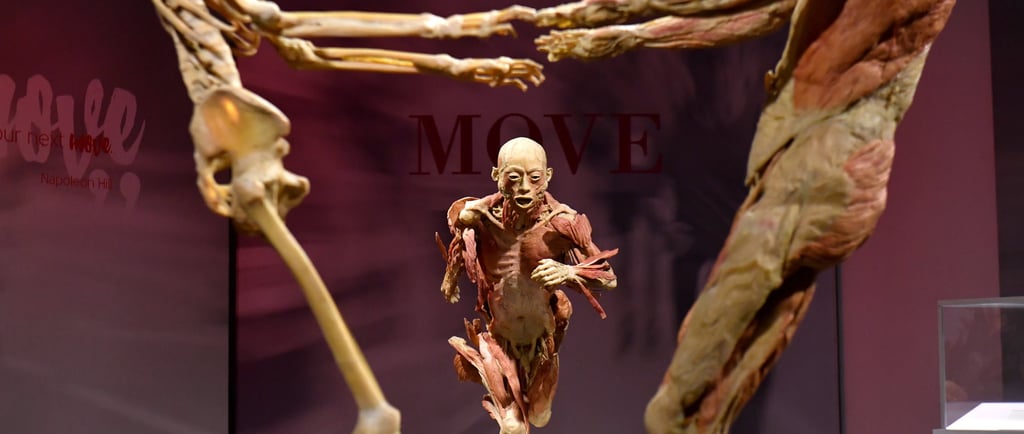
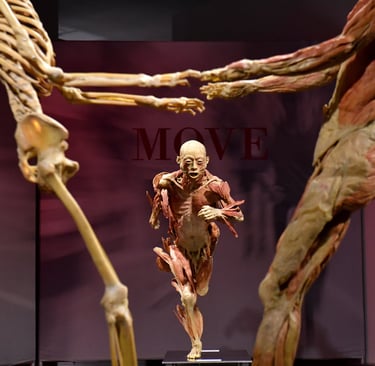
Real human bodies — preserved, dissected, and posed in dramatic athletic stances — promising to reveal the mysteries of human anatomy. Millions of people around the world have visited these exhibitions.
But not all plastination shows are created equal.
Behind the displays lie uncomfortable questions about consent, dignity, and where these bodies actually came from.
This article explores the controversial world of plastination exhibitions — from the famous Body Worlds to its lesser-known imitators — and the ethical debates that continue to surround them.
Watch the full investigation here:
What Is Body Worlds?
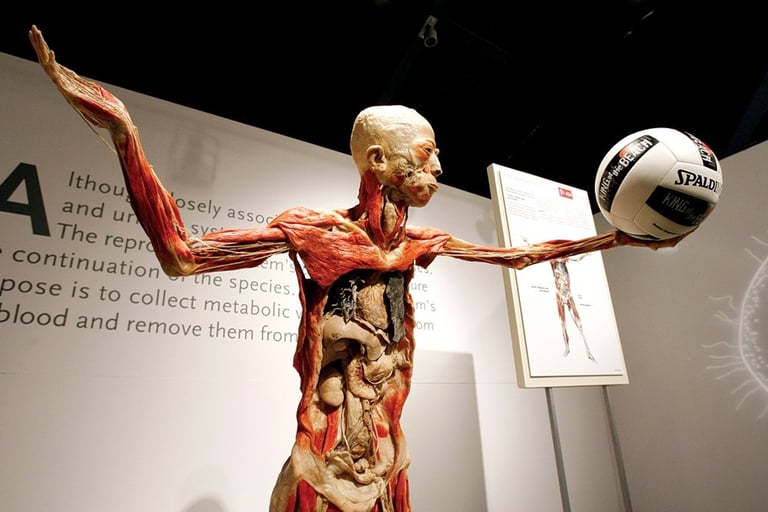
Body Worlds — known in German as Körperwelten — is a travelling exhibition of real human bodies preserved using a technique called plastination.
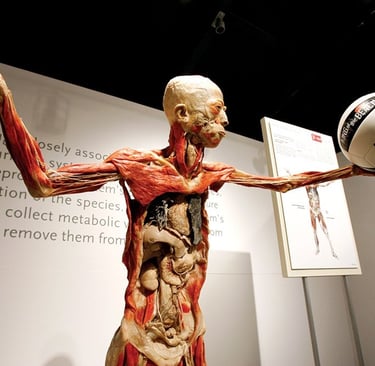
Visitors walk through galleries filled with genuine human corpses, stripped of skin and posed in everyday or athletic positions: riding horses, throwing basketballs, even playing poker.
The process was developed in the late 1970s by German anatomist Dr Gunther von Hagens. Plastination replaces the water and fat in tissues with polymers such as silicone rubber or epoxy resin, leaving behind dry, odourless specimens that can be permanently preserved and displayed.
Von Hagens first exhibited full plastinated bodies in Tokyo in 1995. By 2025, Body Worlds had toured more than 170 cities across 42 countries and attracted over 57 million visitors — becoming one of the most successful travelling exhibitions in history.
The Controversies Surrounding Body Worlds
Despite its popularity, Body Worlds has faced criticism since its earliest days.
The Consent Question
Von Hagens maintains that all specimens came from voluntary donors enrolled in his body donation program, established in 1982. More than 16,000 people are reportedly registered.
However, the program has never been independently audited.
In 2004, German magazine Der Spiegel reported that von Hagens’ company had acquired corpses from executed Chinese prisoners. Von Hagens initially denied the claims, but later returned seven bodies to China after they were found to show evidence consistent with execution, including bullet wounds to the skull.
He argued that Chinese employees had acted against his instructions and later secured an injunction preventing Der Spiegel from repeating the allegations.
The Russian Connection
In 2002, two Russian doctors from the University of Novosibirsk were charged with illegally supplying von Hagens with 56 bodies, including those of prisoners, homeless individuals, and people with mental illness — without consent from relatives.
Von Hagens stated that none of these bodies were used in exhibitions.
While Body Worlds positions itself as the most ethical operator in the industry, these incidents demonstrate how fraught the field has been from the beginning.
The Rise of Imitators
The enormous success of Body Worlds spawned numerous copycat exhibitions — many of which openly acknowledge that they cannot independently verify the consent of the bodies they display.
Bodies: The Exhibition
Launched in Florida in 2005 by Premier Exhibitions, Bodies: The Exhibition quickly expanded across the United States and overseas.
Unlike Body Worlds, Premier admitted that many of its specimens came from “unclaimed bodies” in China.
Investigations by The New York Times and ABC’s 20/20 raised concerns about a possible black market in cadavers, prompting a U.S. congressional inquiry and a probe by then–New York Attorney General Andrew Cuomo.
In 2008, Premier reached a settlement requiring disclaimers stating that it relied solely on Chinese suppliers and could not independently verify that the bodies were not executed prisoners.
Despite this, the exhibitions remained popular, attracting millions of visitors.
Bodies Revealed
Another Premier production, Bodies Revealed debuted in South Korea before touring internationally.
Premier maintains the bodies came from donors who died naturally and consented to medical and educational use. Yet sourcing questions persisted, as specimens originated from the same Chinese institutions linked to earlier controversies.
When the exhibition returned to Michigan in 2019, museums defended its educational value despite ongoing criticism.
Our Body: The Universe Within
Marketed as a nonprofit alternative, Our Body promised a more restrained, scientific presentation.
Nevertheless, critics questioned whether its specimens truly came from voluntary donors. Some venues defended the exhibition, while others refused to host it after conducting their own research into its provenance.
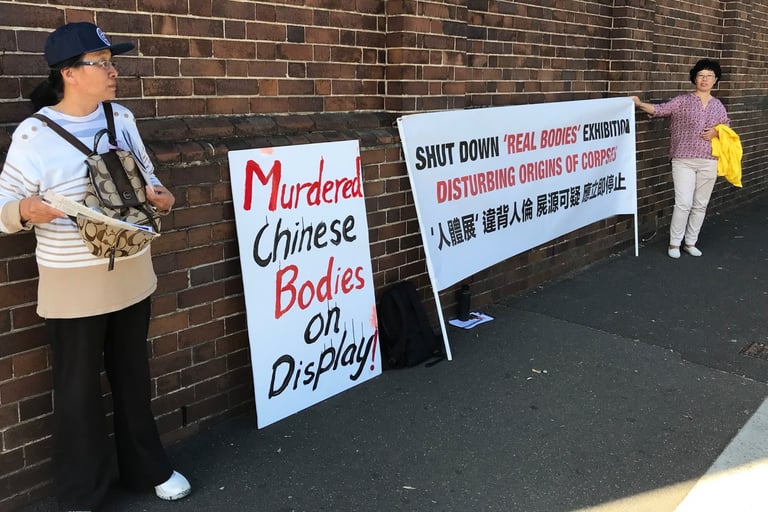
Real Bodies: The Exhibition
Run by Imagine Exhibitions, Real Bodies has toured widely across Australia, the UK, and the United States.
The company acknowledges that its specimens came from “unclaimed bodies” in China and admits there is no documentation proving consent or identity.
Although recent public claims linking specimens to missing individuals were later disputed, they underscore the enduring suspicion surrounding these exhibitions.
Mysteries of the Human Body
This Asia-based exhibition toured Japan and South Korea in the early 2000s, advertising plastinated bodies from China.
Organisers initially downplayed that the specimens were real human remains. Once the truth emerged, critics accused the exhibition of prioritising spectacle over education.
The Dalian Connection
A common thread runs through nearly all of these exhibitions: Dalian, China.
Many were supplied by factories founded or influenced by Sui Hongjin, a former manager at von Hagens’ Chinese operations. After leaving, Sui partnered with Premier Exhibitions to produce Bodies: The Exhibition and acknowledged in interviews that some cadavers came from police departments.
By the mid-2000s, at least ten plastination factories operated in China, exporting bodies worldwide. Reports suggested a single plastinated corpse could sell for hundreds of thousands of dollars.
Yet Chinese law requires a body to remain unclaimed for at least a month before being used for medical purposes — while plastination must begin within days of death.
That timeline raises obvious and troubling questions.
Visiting Body Worlds: A Personal Reflection
After years of avoiding the exhibition, I finally attended Body Worlds during its most recent Australian tour.
Expecting something sensationalised, I was surprised by how restrained and educational it felt. Families attended together, with parents explaining injuries and anatomy to children in thoughtful, matter-of-fact ways.
While I wouldn’t rush back, the experience highlighted how understanding the body — and its limits — can foster healthier conversations about medicine, mortality, and realism about what doctors can and cannot fix.
When conducted ethically, such exhibitions may serve an important educational role.
What Should We Make of All This?
Body Worlds maintains a donor program and has returned bodies when sourcing was questioned.
Many imitators cannot demonstrate the same level of transparency.
The debate ultimately comes down to one question:
Do we truly know whose bodies we are looking at — and whether they agreed to be there?
Understanding how these exhibitions operate matters. Conversations about death don’t stop at funerals and hospitals — they extend into museums, public education, and how societies choose to confront mortality.
What do you think about plastination exhibitions and the ethics behind them?