Modern Executioners Speak: The Job No One Wants to Talk About
Capital punishment does not end with the condemned. In countries where the death penalty still exists, someone has to carry out the sentence. But what happens to those people once the execution is over.
2/2/20265 min read

The Hidden Lives of Modern Executioners: When the Workday Ends
In countries where capital punishment still exists, there are people whose job it is to carry out the ultimate sentence. But who are they when they leave the prison walls? How do their communities see them? And how do they live with what they do?
The reality is a complex tapestry of religious duty, chilling pride, hereditary burden, profound trauma, and systemic silence. The life of an executioner depends almost entirely on where in the world they stand. This post explores their stories, in their own words, to understand the hidden human cost of this ancient profession.
The Hidden Lives of Modern Executioners: A Global Perspective
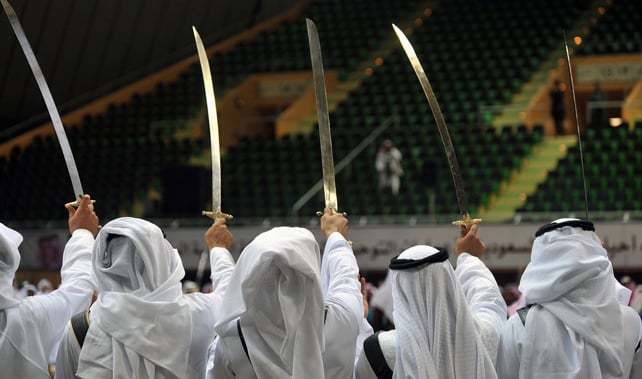
The Saudi Executioners – “Doing God’s Will”
In Saudi Arabia, the role of the executioner is often framed as a sacred, normalized duty. Muhammad Saad Al-Beshi, the kingdom’s leading executioner, has described his work with striking matter-of-factness.
"It doesn't matter to me: Two, four, ten—as long as I'm doing God's will," he has said. He recounts his first beheading with technical clarity, noting that initial "stage fright" is now a thing of the past. For Al-Beshi and his colleague Abdallah Al-Bishi, the key is emotional detachment.
"If I let myself feel mercy or compassion for the person I am executing, he will not die at the first stroke," Al-Bishi explains. "He will suffer. If the heart is compassionate, the hand fails."
What’s most remarkable is their reported separation of work and home life. Al-Bishi claims to return home relaxed, playing with his children as if returning from any other job. Al-Beshi, who has trained his own son to succeed him, says his family sometimes helps him clean his sword. In their community, they report no stigma—their identity is public, yet accepted as a religious and legal necessity.
The Egyptian Executioners – Pride and a “Heart of Stone”
In Egypt, some executioners express not just acceptance, but disturbing enthusiasm. Hajj Abd al-Nabi, who claims over 800 executions, stated plainly: "I love my work. I just love it!"
His preparation began in childhood with animal cruelty. "I was a little Satan. My hobby was to catch a cat, to place a rope around its neck, to strangle it... Strangulation was my hobby." He is self-aware about the required psyche: "Only if you have a heart of stone can you be content in this line of work. I have a heart of stone."
Unlike the isolation seen elsewhere, another Egyptian hangman, Hussein Urni, claims his work has boosted his social standing. He says his children were sought out at school by peers who saw their father’s picture in the paper, proud to be friends with a "celebrity’s" children. The contrast with other nations is stark.
The Indian Executioners – A Hereditary Burden
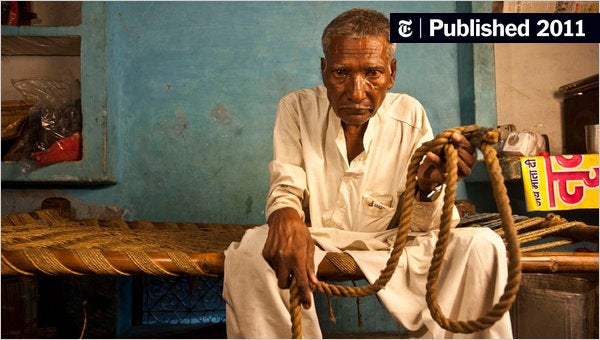
In India, execution has traditionally been a hereditary duty, carried by specific families under a heavy cloud of stigma. Pawan Kumar is a fourth-generation hangman. His description of the process is mechanical: "First, you tie the legs, then you put the cloth over the head, then you place the noose..."
The social and financial costs are severe. He lives on a meager stipend, supplementing his income by selling clothes from a trolley. The legacy is also one of shame; his grandfather executed Indian freedom fighters under British rule—a stain the family has hoped to wash away with subsequent "just" executions.
None of Pawan’s seven children wish to continue the tradition. The burden ends with him.
The American Experience – From Duty to Activism
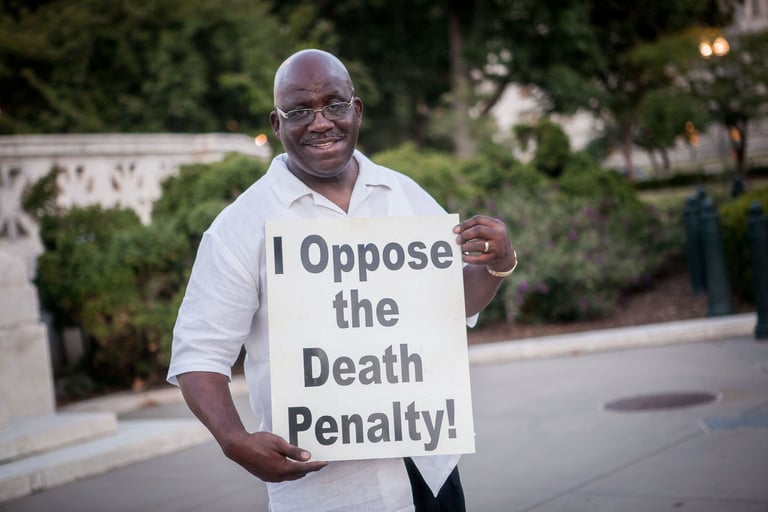
The story of Jerry Givens, Virginia’s chief executioner from 1982 to 1999, reveals a profound transformation. He executed 62 people, initially believing in the justice of his work. He prayed with the condemned, believing they had the "advantage" of knowing their time to repent.
But the toll was immense. "You have to transform yourself into that person that will take a life," he said. He kept his job a secret from his own family for 17 years. The turning point came with the near-execution of Earl Washington Jr., a man later exonerated by DNA evidence.
"If I execute an innocent person, I'm no better than the people on death row," Givens realized. After serving a prison sentence himself, he became a passionate anti-death penalty activist. His conclusion was stark: "You can't tell me I can take the life of people and go home and be normal." He spent his later years warning of the human cost, stating, "We ask people to do things for the state that no human being should have to do. And then we leave them to deal with the consequences alone."
The Psychological Toll – A Hidden Epidemic
Research is now confirming what figures like Givens experienced: this work inflicts deep psychological wounds. Studies suggest 31% of prison staff involved in executions suffer from PTSD—a rate higher than that seen in many combat veterans.
Symptoms include flashbacks, uncontrollable crying, nightmares, depression, and substance abuse. A former execution coordinator drank a bottle of scotch a day to cope; decades after a botched electrocution, he still feels responsible.
Yet, support is scandalously rare. An investigation found that of dozens of execution team members interviewed, only one received counseling from the government. Multiple states with active death penalties offer no long-term mental health support for their execution teams.
Systemic Failure and “Sucking It Up”
This institutional indifference is sparking resistance. In 2024, nine former Oklahoma corrections officials pleaded for more time between executions, citing the "lasting trauma" and "psychological toll" on staff. Some employees, lacking state resources, have secretly sought help from defense team psychologists.
One judge’s response to these concerns? He told officials they needed to "suck it up" and "man up." This attitude highlights the systemic failure to acknowledge the humanity of those tasked with carrying out the ultimate punishment.
Moral Disengagement – How They Cope
To perform this work, individuals must psychologically distance themselves. A Stanford study called this "moral disengagement." Some frame it as a duty to law and order, others as a religious obligation. Some try to view it as a clinical, medical procedure.
But these defenses often crack. The internal conflict leads to severe stress. As one prison official noted, one of the worst moments is when acquaintances learn of your role and eagerly ask for gory details. "In that moment you find out just how sick some people in your life really are," they said, "and you never look at them the same way again."
Final Thought
The executioner lives in a paradox—an agent of the state’s most powerful law, yet often its most invisible victim. Their reality swings from normalized religious duty to profound, solitary trauma, dictated by geography, culture, and support systems that are often deliberately absent.
Jerry Givens’s warning echoes: we ask people to do the unthinkable, and then we turn away. Their stories force us to look not just at the morality of the punishment, but at the price paid by the human hands that administer it.
What are your thoughts on the human cost carried by executioners?