Inside Europe's Most Death Obsessed City
Exploring Vienna's unique death culture, exploring cemeteries, crypts, catacombs, funeral museums and medical collections.
1/19/20265 min read
Vienna: Inside Europe’s Most Death-Obsessed City
Vienna is a city that doesn’t shy away from death.
Austria’s capital has a long and deeply ingrained relationship with mortality, woven into its culture, architecture, medicine, and public spaces. Rather than hiding death behind closed doors, Vienna integrates it into everyday life through museums, memorials, cemeteries, and even cafés.
Last year, I finally had the chance to visit the city and explore its many death-related sites. What I found was not a city obsessed with morbidity, but one that treats death with history, ceremony, curiosity, and respect.
If you’re ever planning a trip to Vienna, this is your guide to some of its most fascinating - and confronting — death-related landmarks.
Vienna Central Cemetery
Zentralfriedhof
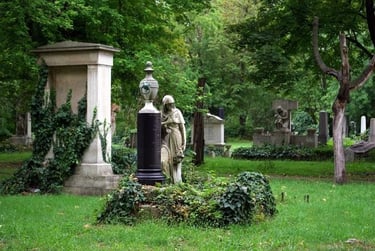
Vienna’s Central Cemetery is one of the largest cemeteries in Europe — and one of the most impressive.
Opened in 1874, it was built in response to a problem many European cities faced at the time: inner-city graveyards were overflowing. The solution was to build vast cemeteries outside the city limits, designed to serve future generations.
Today, the cemetery spans the equivalent of around 350 football fields and contains more than 330,000 graves, with an estimated three million people buried there.
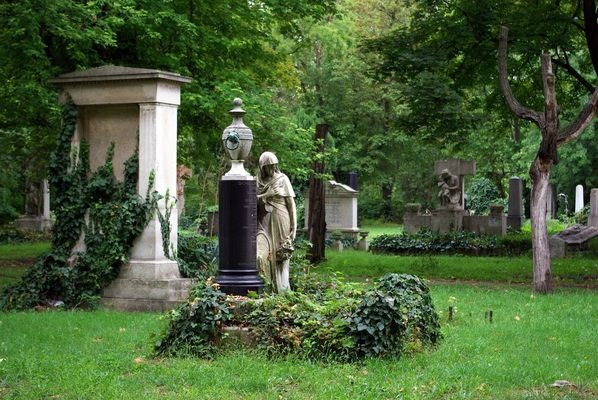
Despite its scale, it doesn’t feel oppressive. The grounds are beautifully maintained, with forested sections, wildlife, walking paths, and even a café on site — complete with table service and elegant pastries.
One of the most moving areas is the Anatomy Memorial Centre, where people who donated their bodies to medical science are laid to rest after their remains are cremated. It’s a powerful reminder of Vienna’s long history of medical education and research.
The Funeral Museum
Bestattungsmuseum Wien
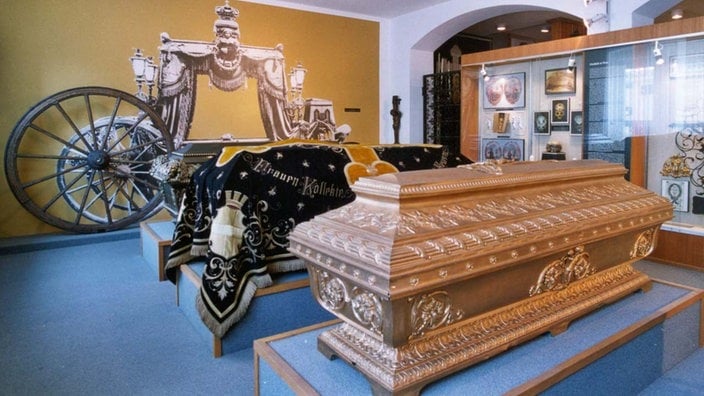
Located directly within the cemetery grounds, Vienna’s Funeral Museum offers a deep dive into what locals call the “Viennese cult of the dead.”
The museum houses more than 250 original objects tracing the city’s funeral traditions from the 18th century to today — including historical hearses, mourning attire, coffin designs, funeral advertisements, and medical transport equipment.
It explores how Vienna developed its distinctive funeral culture, where elaborate ceremonies and public rituals were once seen as a mark of respect and social status.
It’s surprisingly charming, thoughtfully curated, and refreshingly honest about the business and logistics behind death.
The Imperial Carriage Museum
Wagenburg
At first glance, this museum seems out of place on a death-themed tour. It showcases the grand carriages of the Habsburg dynasty — the rulers of Austria for over 600 years.
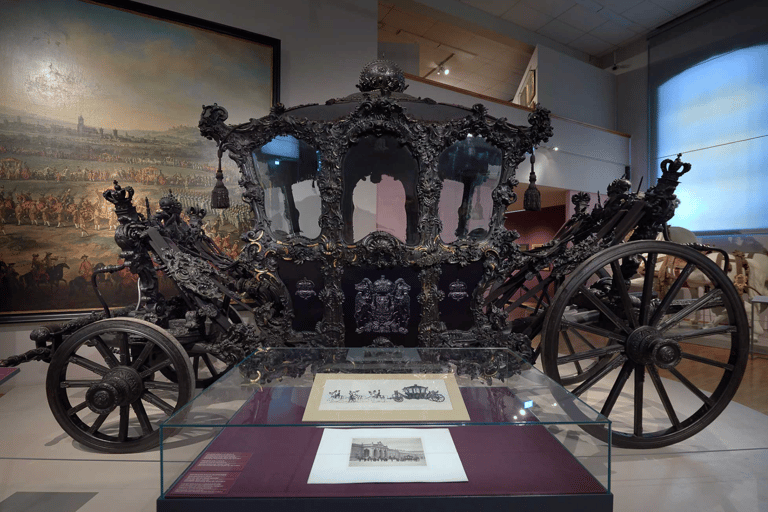
But hidden among the royal transport is one extraordinary vehicle: the black funeral hearse of the Viennese court.
Built between 1876 and 1877, it is an extraordinary display of craftsmanship, designed to carry emperors and empresses to their final resting place. It is opulent, theatrical, and undeniably impressive.
It reflects a time when death was not hidden, but staged — publicly, ceremonially, and with immense symbolism.
The Habsburg Imperial Crypt
Kapuzinergruft
Beneath the Capuchin Church in the heart of Vienna lies the burial site of the Habsburg dynasty.
The Imperial Crypt contains 150 members of the royal family, including 12 emperors and 19 empresses. Their tombs range from relatively modest coffins to enormous, ornate sarcophagi.
What’s most striking is how accessible it is. Visitors walk freely among the coffins. There are no glass barriers or rope lines. You are standing face-to-face with centuries of European royalty.
Some early Habsburgs requested modest burials, only to be exhumed centuries later by descendants who preferred a more dramatic resting place. Even in death, family politics clearly endure.
St Stephen’s Cathedral Catacombs
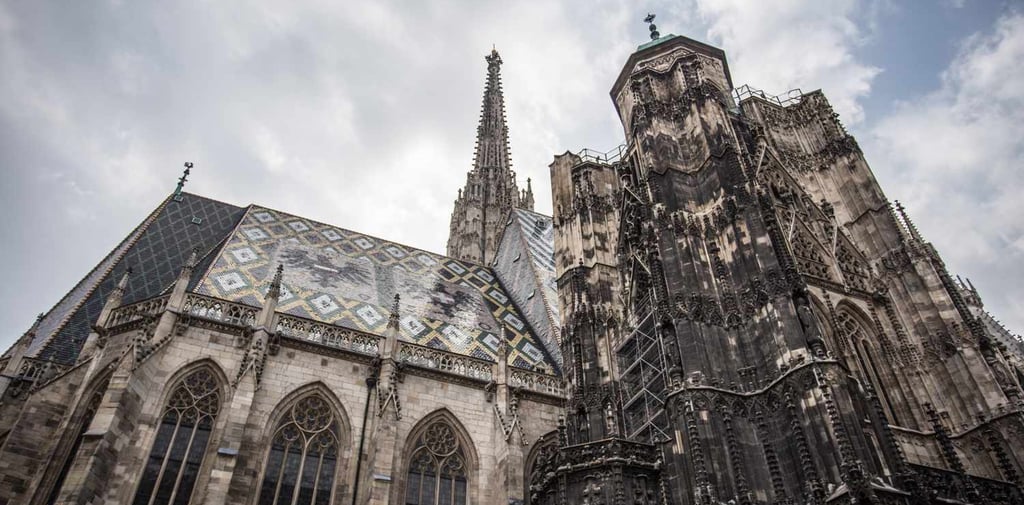
Beneath Vienna’s iconic gothic cathedral lies a network of crypts and catacombs dating back to 1718.
The guided tour begins among the coffins of bishops and dukes, then moves through chambers containing urns filled with preserved organs of Habsburg royalty — whose bodies are buried elsewhere in the city.
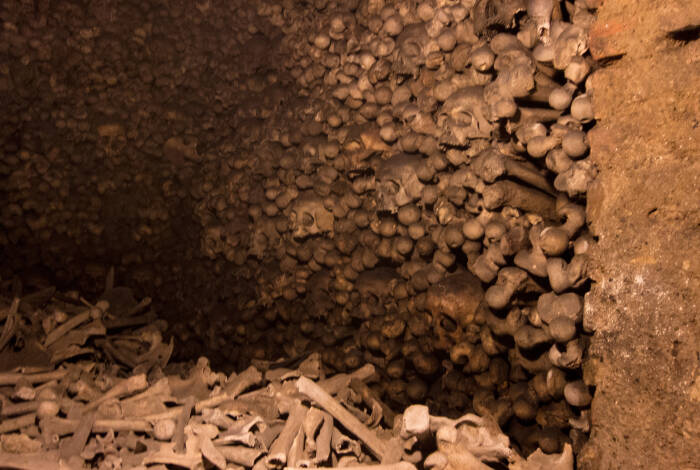
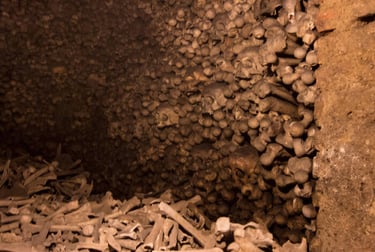
Finally, visitors descend into the catacombs themselves, where the bones of more than 11,000 people are stored. Many died during the plague outbreaks of the 18th century.
It’s tight, dark, and confronting — but also surprisingly respectful. The remains are treated with care and reverence, rather than spectacle.
The Narrenturm Anatomical Collection
The Narrenturm is one of the most unusual medical museums in the world.
Built in 1784 as a psychiatric hospital, it now houses a vast pathological-anatomical collection used for medical education. Inside are thousands of preserved specimens showing congenital conditions, disease, deformities, and trauma.
It is not a comfortable museum — but it is an important one. It documents the reality of the human body, reminding us that biology is unpredictable and fragile.
For anyone interested in medicine, anatomy, or medical history, it is an extraordinary archive.
Vienna’s Medical History Museum
Vienna has been a centre of medical education for over 650 years, and this museum showcases that legacy.
Among its collections are over 1,100 wax anatomical models created in the late 1700s. These hyper-realistic sculptures were used to teach medical students long before modern imaging existed — and they are still used today.
It’s a striking reminder that long before digital medicine, learning about the body required painstaking artistry.
Beyond Vienna: Death Sites Across Central Europe
While Vienna offers an extraordinary concentration of death-related landmarks, nearby cities also hold remarkable sites.
The Capuchin Crypt, Brno (Czechia)
A monastery crypt where monks were laid directly on the floor centuries ago. Due to natural airflow, many of the bodies became naturally mummified and remain preserved today.
St James Ossuary, Brno
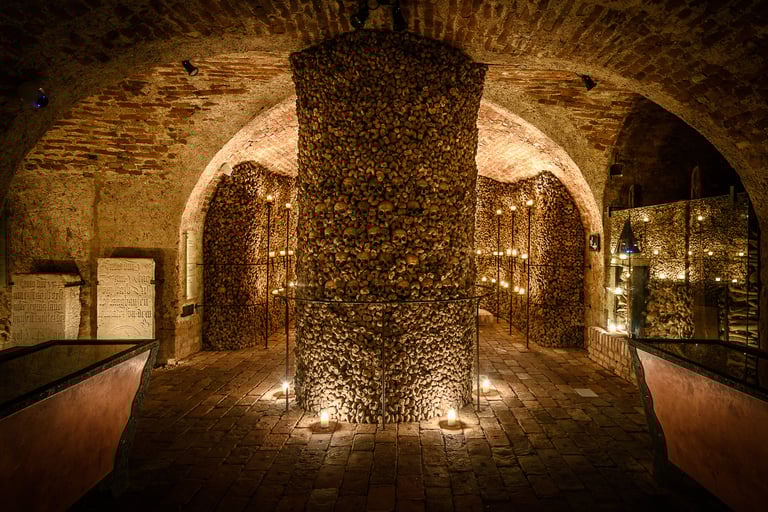
An ossuary containing the bones of over 50,000 people, many victims of plague. The bones have been arranged decoratively — a choice that feels more theatrical than reverent.
Kerepesi Cemetery, Budapest
One of Europe’s most striking cemeteries. Vast plots, monumental tombs, and enormous mausoleums create a landscape of memory on a massive scale. It includes sections for political figures, military burials, and people denied church funerals — an unusually progressive choice for the 19th century.
What Vienna Teaches Us About Death
Vienna doesn’t treat death as something to hide.
It treats it as history. As culture. As education. As architecture. As ritual.
From its grand cemeteries to its medical museums, Vienna shows us that death can be approached with curiosity, respect, and honesty — without fear or denial.
It reminds us that mortality is not something separate from life. It is woven into it.
And perhaps that’s why Vienna feels so uniquely comfortable talking about it.